Records Management Knowledge Center
Learn how to manage, organize, and store your critical data more efficiently.
Improving the accessibility and security of your data doesn't need to be difficult. Our knowledge base contains all the information you need to make informed decisions when its time to modernize your records management practices.

Anyone working at a credit union has probably experienced some version of the same situation: a line of members slowly building in the lobby, the phone will not stop ringing, and the document needed for the person standing at the counter is nowhere near where it was expected to be. Spending a few extra minutes
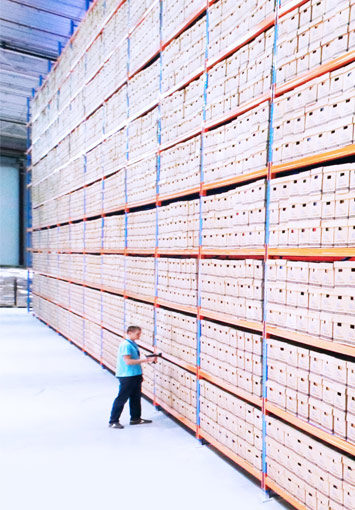
Managing large volumes of paper documents can be overwhelming, but bulk scanning simplifies the process. By converting stacks of paper into secure, searchable digital files, you can save time, improve access to information, and enhance data security.

Logistics moves fast. Every day involves coordinating drivers, managing warehouse activity, handling deliveries, and keeping freight moving on schedule. Yet, for an industry built around speed, the back office often moves much slower. Trucks can cross state lines in a matter of hours, but the paperwork they generate often takes days or weeks to get

The final weeks of a construction project are rarely quiet. Even after the physical work is complete, there is still paperwork that needs to be organized and handed over before everything can officially be closed out. As-built drawings, O&M manuals, warranties, permits, and subcontractor records all need to be collected, assembled, and delivered properly. For

Manufacturing environments depend on fast access and accurate information, and unfortunately, paper gets in the way of both. Records like material certifications, maintenance logs, and inspection paperwork often end up spread out across the facility depending on which department is using them at the time. As paperwork continues piling up over the years, filtering out

While most engineering and manufacturing work now starts digitally, using CAD and other design software, many engineers still rely on older drawings created long before digital tools were standard. Many of these designs represent active equipment, structures, and systems that are still in use today. In some cases, they may be the only record of
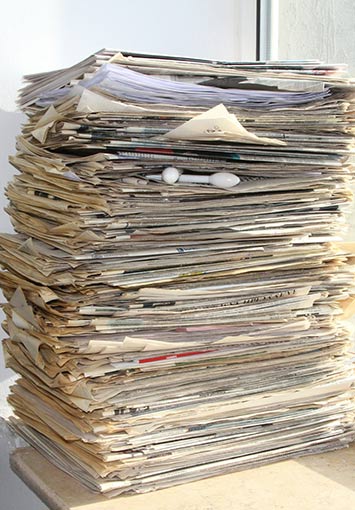
Most businesses operate under the assumption that more data is better. They keep every email, every draft, and every invoice because they worry that one day they might need it. Over time, that collection grows, and those unnecessary records eventually reach a point where they are a liability. This is where data minimization comes into

As expectations around digital access continue to grow, information needs to be presented in ways that support wide access and independent use. PDFs are the go-to format for distributing information that needs to display consistently across devices, especially within government, education, and healthcare environments. Their broad compatibility makes them ideal for publishing official documents, distributing

Both businesses and government institutions rely on PDFs to share important documents with the public. Policies, forms, reports, public notices, training materials, and guides are often distributed in PDF format because they’re easy to share, easy to open, and they keep formatting consistent from one device to the next. The problem is that many PDFs

Paperwork is one of the most common side effects of running a business. Every transaction, new hire, and contract comes with a record that needs to be stored. A few files turn into drawers, drawers turn into cabinets, and before long, paper is piling up all around you. Professional document scanning helps you convert these